


The Role of Foundry for High-Performance AI Semiconductors
Abstract
Recently, the AI semiconductor market has been experiencing rapid advancements across multiple dimensions, including computational performance, energy efficiency, and integration density. As a result, not only the design capabilities of fabless companies but also the manufacturing capabilities of foundry companies that implement these designs have become more critical than ever. In particular, achieving high yield, possessing advanced process technologies, and securing advanced packaging capabilities have emerged as key factors for realizing high-performance AI semiconductors.
This study selects TSMC, the world’s largest foundry company, as a case and analyzes how the company secures manufacturing competitiveness in AI semiconductors through yield management, process control, and advanced packaging technologies. The findings indicate that TSMC enhances AI semiconductor performance through integrated management across the entire value chain—from design and manufacturing to packaging and mass production—while maintaining stable production capabilities and making proactive R&D investments in advanced packaging. These results demonstrate that the integrated management of yield, process, and packaging constitutes a core mechanism for improving AI semiconductor performance.
References
- Er-Ping Li et al., “An Electromagnetic Perspective of Artificial Intelligence Neuromorphic Chips,” Electromagnetic Science, Vol. 1, No. 3, Sep. 2023
- Heyang Xu, “FPGA: The super chip in the age of artificial intelligence,” Journal of Physics: Conference Series, doi:10.1088/1742-6596/2649/1/012018, 2023
- Dhruvitkumar V. Talati, “Silicon minds: The rise of AI-powered chips,” International Journal of Science and Research Archive, Vol. 01, No. 02, pp. 097-108, 2021.
- Sorna Mugi Viswanathan, “AI Chips: New Semiconductor Era,” International Journal of Advanced Research in Science, Engineering, Technology, Vol. 7, No. 8, pp. 14687-14694, Aug. 2020
- Hyunji Kim, Seyoung Yoon, Hwajeong Seo, “Research Trends in Domestic and International AI Chips,” Smart Media Journal, Vol. 13, No. 3, pp. 36–44, Mar. 2024.
- Hiroshi Momose, Tatsuya Kaneko, and Tetsuya Asai, “Systems and circuits for AI chips and their trends,” Japanese Journal of Applied Physics 59, 2020
- P. Ebby Darney, “A Review on Artificial Intelligence Chip,” Recent Research Reviews Journal, Vol. 1, No. 1, pp. 99-109, Dec. 2022
- Prashis Raghuwanshi, “Revolutionizing Semiconductor Design and Manufacturing with AI,” Journal of Knowledge Learning and Science Technology, Vol. 3, No. 3, Sep. 2024
- Shaojun Wei et al., “Reconfigurability, Why It Matters in AI Tasks Processing: A Survey of Reconfigurable AI Chips” IEEE TRANSACTIONS ON CIRCUITS AND SYSTEMS—I, Vol. 70, No. 3, pp. 1228- 1241, Mar 2023
- Siwoo Eum, et al., “Development Trends in Artificial Intelligence Semiconductors,” Journal of the Korea Institute of Information Security and Cryptology, Vol. 35, No. 3, pp. 63–71, Jun. 2025.
- Robert Huggins et al., “Competition, open innovation, and growth challenges in the semiconductor industry: the case of Europe’s clusters,” Science and Public Policy, 50, pp. 531–547, Mar. 2023.
- Wenqiang Zhang et al., “Neuro-inspired computing chips,” Nature Electronics, Vol. 3, pp. 371–382, Jul. 2020
- S. Ambrogio et al., “An analog-AI chip for energy-efficient speech recognition and transcription,” Nature, Vol. 620, 24 Aug. 2023
- Q. Zhang, H. Deng, and K. Song, “Latest VLSI Techniques for 3nm Technology for Building Efficient AI Chips,” “Fusion of Multidisciplinary Research, An International Journal (FMR),” Vol. 5, No. 2, 2024
- https://economist.co.kr/article/view/ecn202507310045 (accessed Aug. 24, 2025)
- Wei Gao, and Pingqiang Zhou, “Customized High Performance and Energy Efficient Communication Networks for AI Chips,” IEEE, Vol. 7, 2019
- Lennart P. L. Landsmeer et al., “Tricking AI chips into simulating the human brain: A detailed performance analysis,” Neurocomputing, Vol. 598 Sep. 2024
- Yon-Chun Chou and I.-Hsuan Hong, “A Methodology for Product Mix Planning in Semiconductor Foundry Manufacturing,” IEEE Transactions on Semiconductor Manufacturing, Vol. 13, No. 3, pp. 278-285, Aug. 2000
- Wojciech T. Osowiecki et al., “Achieving Sustainability in the Semiconductor Industry: The Impact of Simulation and AI,” IEEE Transactions on Semiconductor Manufacturing, Vol. 37, No. 4, pp. 464-474, Nov. 2024
- S. Fore and C.T. Mbohwa, “Cleaner production for environmental conscious manufacturing in the foundry industry,
Keywords
Details
| Section | Articles |
| Issue | Vol. 2 No. 2 (2026): Volume 2 Issue 2 (Jun 2026) |
| Published | 2026-06-18 |
| Pages | 26-37 |
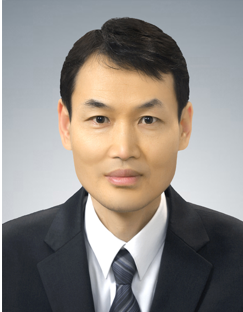
- B.A. in English Literature, Kwangwoon University, 1994
- M.S. (Business Administration), Sungkyunkwan University, 1998
- M.A. in Japanese Studies (International Area Studies), Hanyang University, 1999
- Ph.D. in Business Administration, Seoul School of Integrated Sciences & Technologies (aSSIST), 2013
- Ph.D. Candidate in AI Convergence Engineering, Seoul School of Integrated Sciences & Technologies (aSSIST), 2025–Present
- Research Interests: AI semiconductors, edge devices, etc.

- B.A. in Information Design, Ewha Womans University, 1996
- M.A. in Information Design, Ewha Womans University, 2000
- Ph.D. in Engineering, School of Engineering and Design, Brunel University, 2006
- Professor, Graduate School of Business, Seoul School of Integrated Sciences & Technologies (aSSIST), 2008–Present
- Research Interests: Media processing, context awareness, etc.
License

This work is licensed under a Creative Commons Attribution-NonCommercial-NoDerivatives 4.0 International License.